

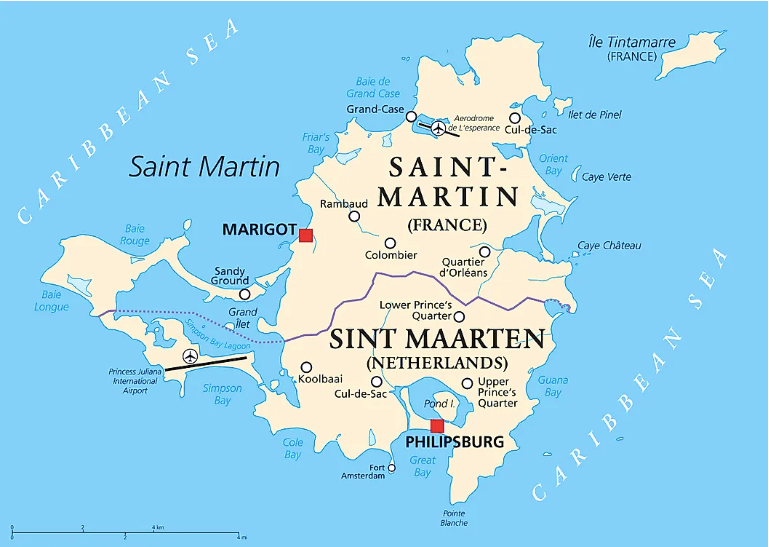
Sint Maarten, or SXM as it’s often referred, is a Dutch Caribbean Island nestled in just to the east of the Virgin Islands. It exists as a constituent country of the Netherlands, though it is divided almost in half, with a French “side” and a Dutch “side”. The French side, with the capital city of Marigot, makes up the northern 56% of the island’s area, while the Dutch side, with Philipsburg as its capital, makes up the remaining 44%. The whole of the island is accessible however to all living there and visiting, and one can easily travel around its entirety by car in about 45-60 mins, depending on traffic. SXM has a rich history and culture, and if you’re keen for some more info there, I’d recommend this source.
It would probably be fair to explain what I’m doing out here in the first place, aside from diving. I do enjoy my life as a traveling musician, and this September, I was fortunate enough to have landed a monthlong gig performing and entertaining at a venue called the Red Piano, where there is indeed a RED piano where I was stationed 5 nights a week 😄. It’s a very fun place, and I highly recommend it if you can spare a late evening or two. Check out the menu and talent lineup here.
But this is a blog about diving, so let’s kick off in that direction…
Carib Cargo
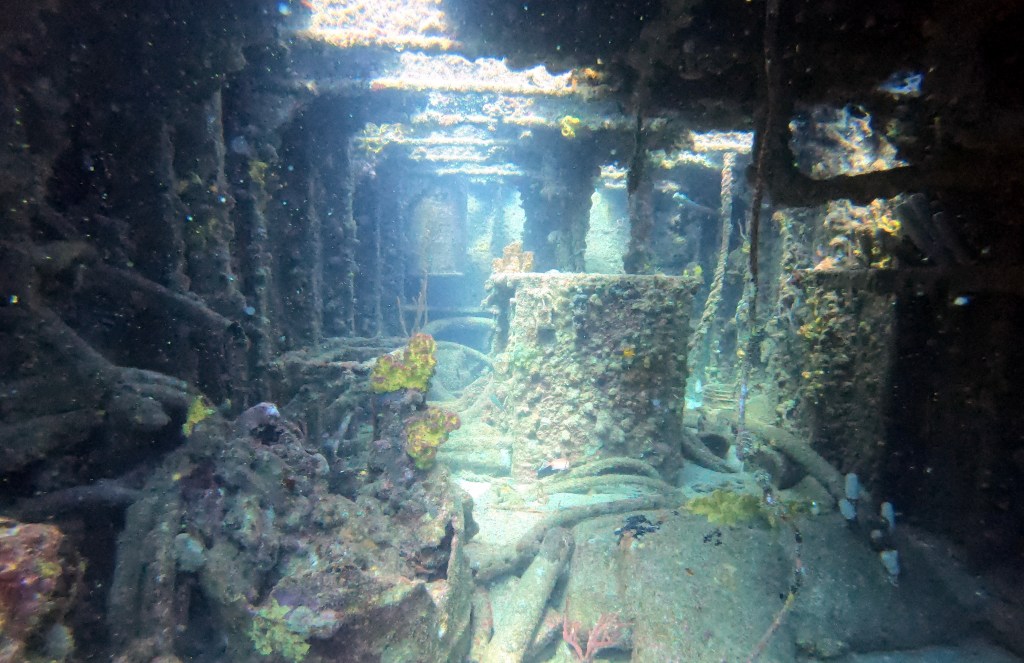
Pictured above is an interior shot of the famed Carib Cargo, or “Carib Ghost”, ship that sank in the 1990’s with the destruction of Hurricane Luis & later Bertha (don’t you love the name Bertha?). It lies broken up by the storm damage at about 55-60 ft, though well enough intact to still safely enjoy a couple swim-throughs across the main cargo hold. Rumor has it that the ship was carrying a large load of the locally brewed Carib beer, hence the nickname (it was originally named the San Francisco)!
Most of the fun was swimming in and out of the interior of the ship, but we did see a few lively residents while swimming around the perimeter. Large schools of yellowtail snapper & trevally populate the area, while sightings of green turtles, stingrays and reef sharks are pretty common.
This ship wreck was a definite highlight of my time diving in SXM, but there are several others worth mentioning. The HMS Proselyte was another I ventured out to the next week, and it was a much different experience, as finding the actual “wreckage” was more of a scavenger hunt than anything else.
The HMS Proselyte
Built in 1770 in Rotterdam, Netherlands, the HMS Proselyte is a former Dutch 36-gun “Jason” frigate. It was handed over to the British in 1796 where it served in the Royal Navy until it sank in 1801. The frigate was en route from Saint Kitts to the port of Sint Maarten when it hit Man of War Shoal in Great Bay, a reef near Philipsburg, where it lies to this day.
There are many broadside guns (cannons that were mounted and fired off from within the ship), ballast bars (heavy metal bars used to provide additional weight and stability), and coral inlaid anchors scattered about the wreck on the bottom. I remember there being three prominent anchors that our guide pointed out, and you’ll be able to see how overgrown they are at this point in time.
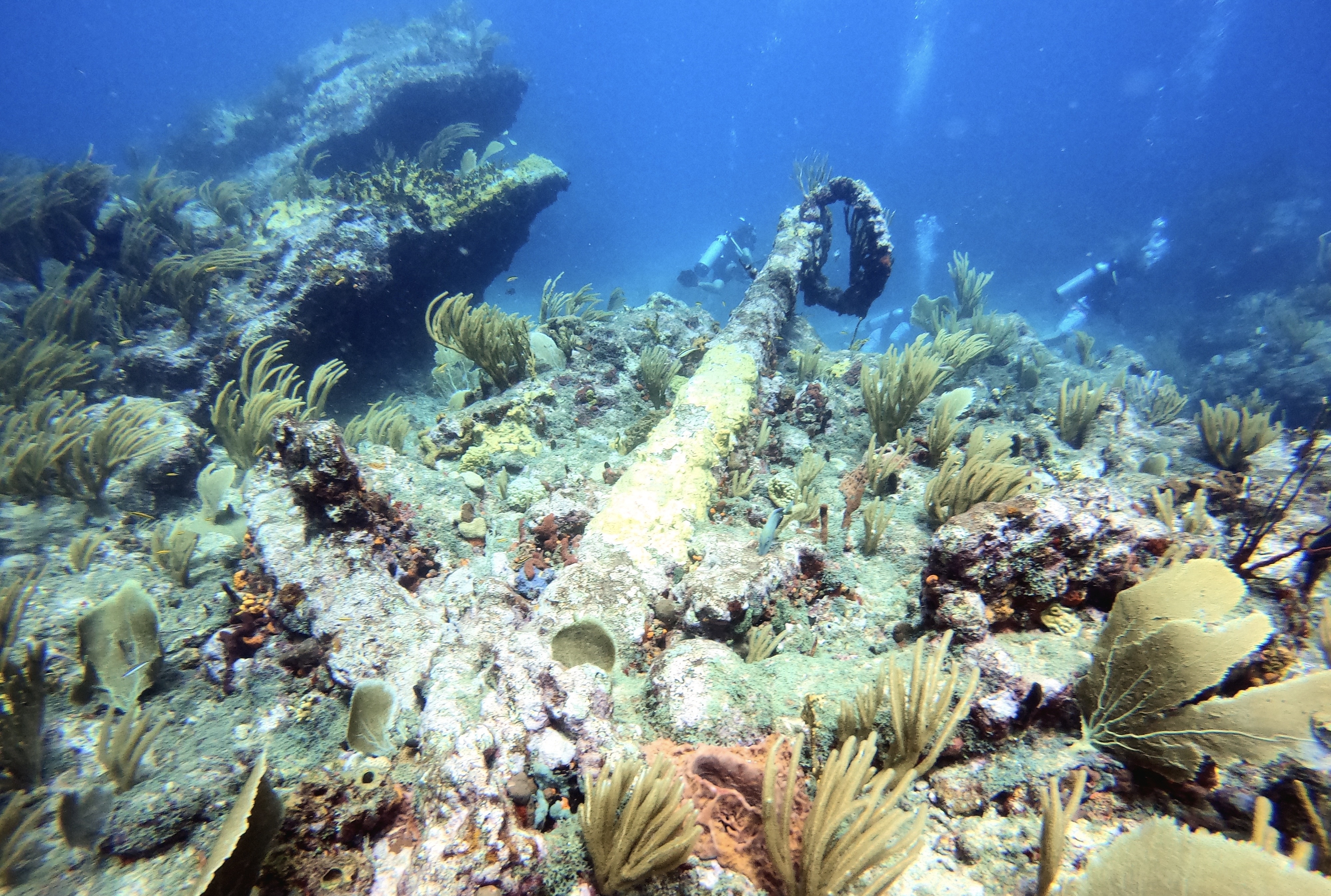
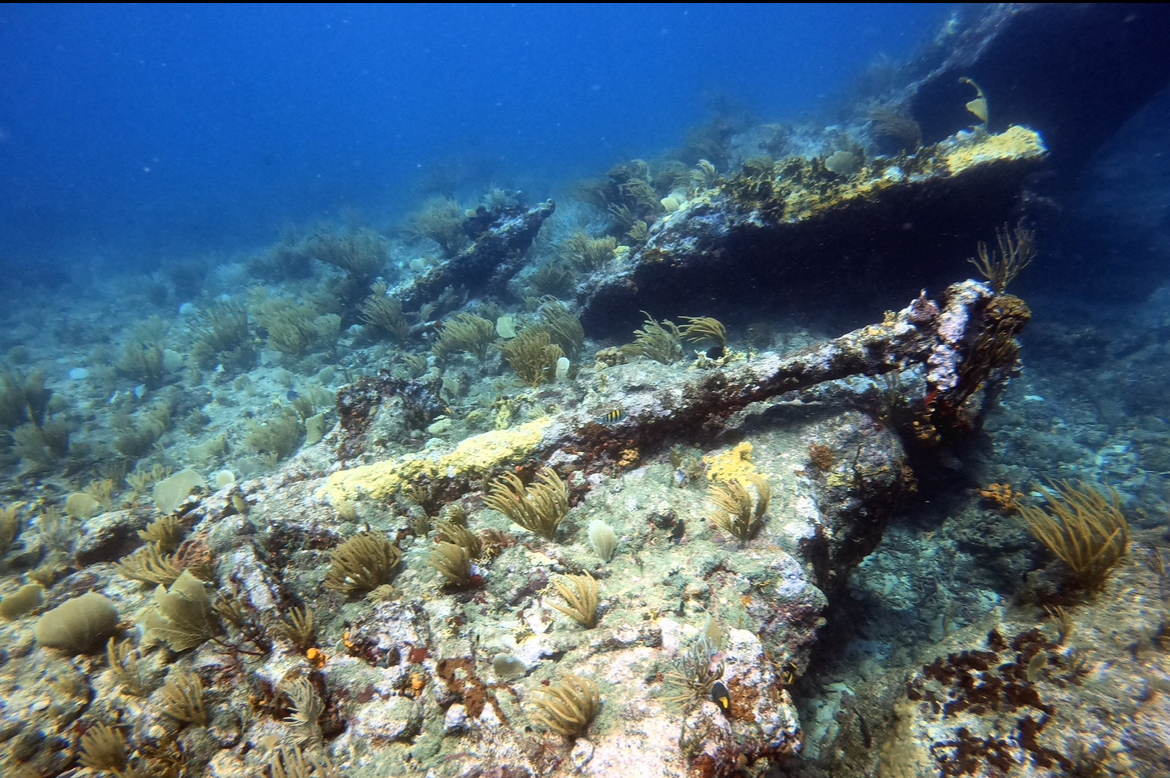
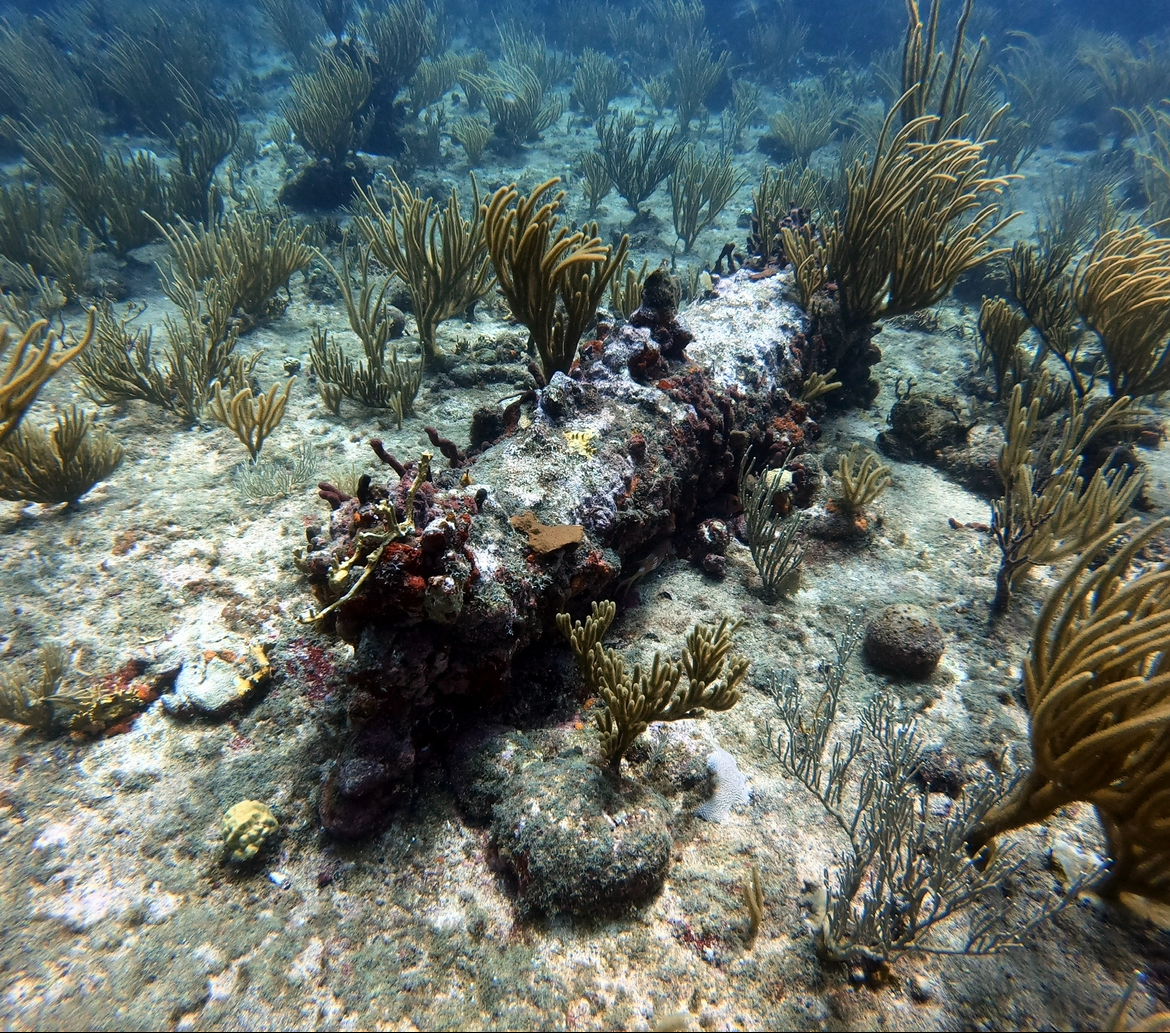
These aren’t the greatest photos out there, but this will hopefully give you an idea as to what a first-hand look would be like.
And speaking of our guide(s), I dove exclusivley with a fantastic outfit called Dive Adventures, located in Pelican Bay, the main resort area en route to Philipsburg from the airport. They were conveniently located near my accommodations, and offered a morning 2-tank dive, as well as a single in the afternoon. I rented most of my gear with them and it was always in top-notch shape, clearly well maintained by the staff. Have a look at their dive packages here. And say hi to Tom and Gecko for me!
The Bridge
As the name might imply, this next and final site I’ll cover here features the purposefully-collapsed “old” Simpson Bay bridge, which was replaced by a wider and higher bridge around 2013 to accommodate the demands of the region’s larger yacht tourism. The remains of the old bridge were dumped at the site and divers can now enjoy another lovely artificial reef. There are also a few smaller sailboats that have been scattered about the site (not exactly sure where these were acquired…) which provide even more fun. They’re not quite large enough to penetrate safely, but you can shine your light into the hull openings to catch a few of the resident lion fish (attention hunters!), yellowtail snapper and different varieties of jack fish.
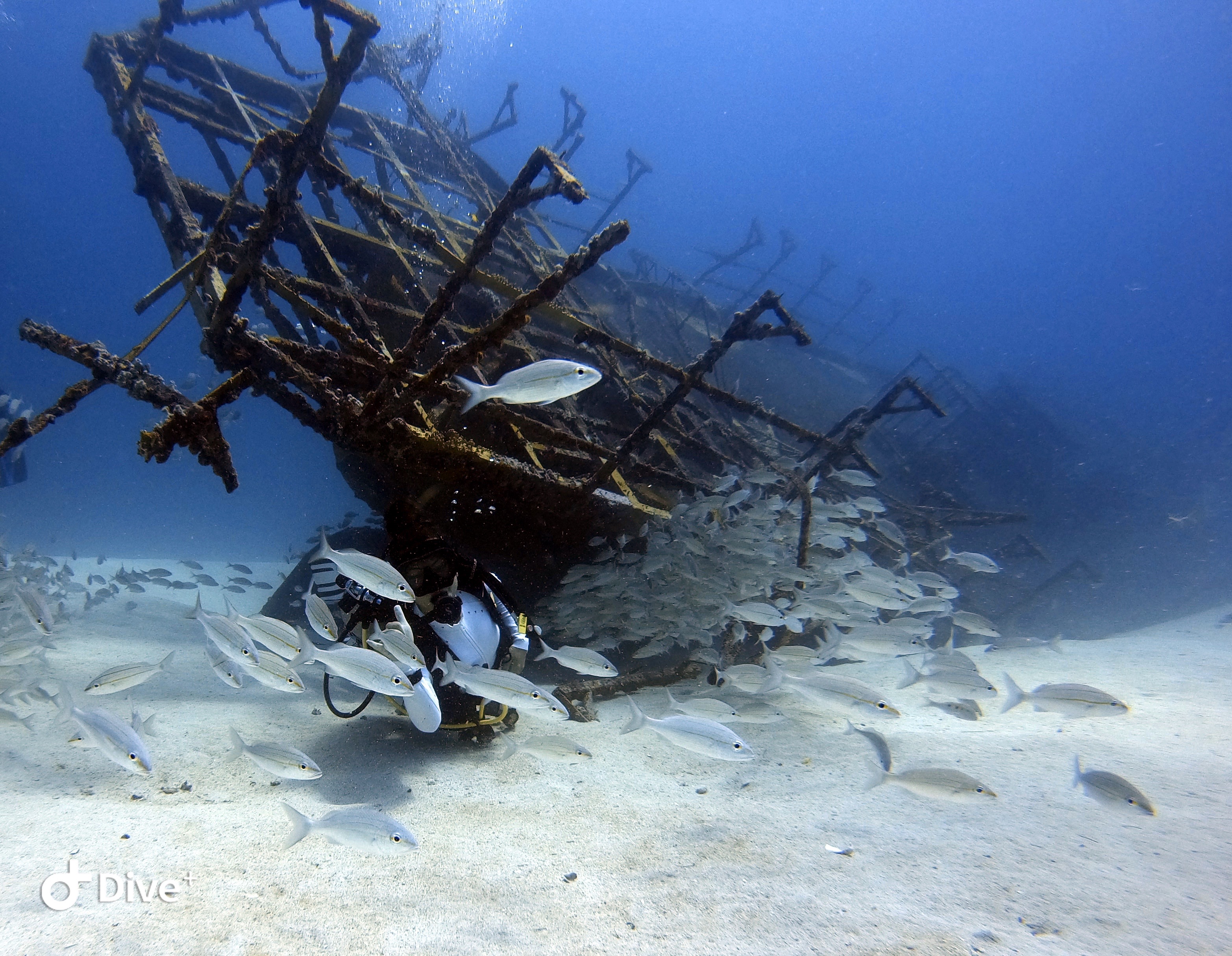
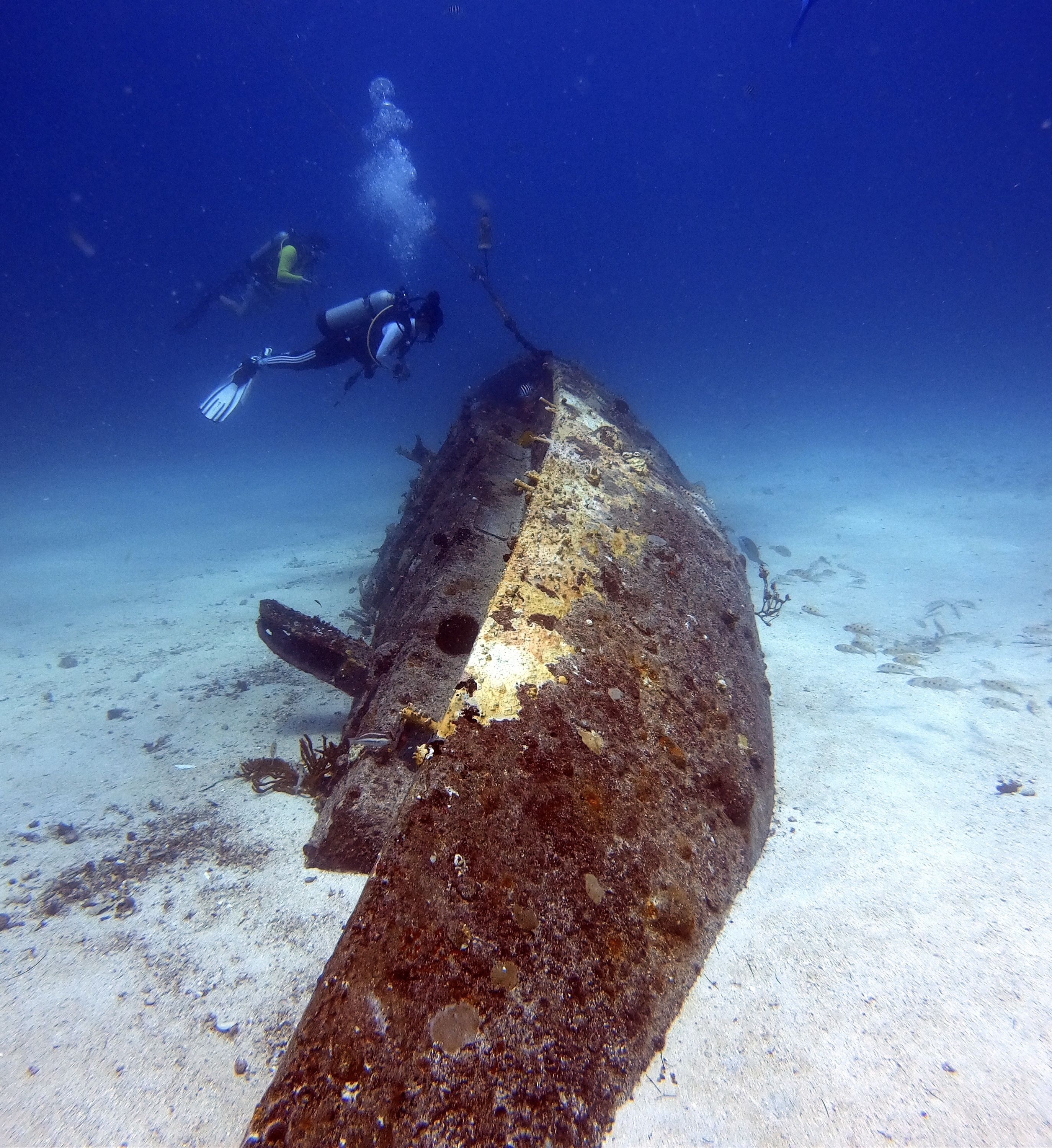
Visibility was great today, and the sandy bottom and clear blue water provided a nice backdrop for our photos and video. There were dense schools of yellowtail hovering about the sunken ships, large enough in number to feel as if you were a part of the flock.
Another thing that makes diving especially fun is when you have a great dive buddy. I had my good friend Bella along with me on this one, and we each caught some synchronized footage of the other chasing the same sting ray. Makes me grateful to have that GoPro and extendable stick!
Hope you enjoyed the footage and brief history of SXM! Until next time, stay safe out there and subscribe for more scuba shop and site reviews! Thanks everyone 🤿
 Vagabond In Fins
Leave a comment